Building Responsible AI For the First Five Years: what we learned from students
An overview of the Elevate Great competition on designing responsible, child-centred AI for early childhood
Building responsible AI for children’s first five years: the Elevate Great Student Competition
Our recent UK-wide higher education student competition focused on a question that is arriving faster than most systems are ready for: what does responsible AI look like in the first five years of life? Students were challenged to present ideas that were ambitious about AI’s potential, while relfecting the potential risks to children. We’ve looked back on what we learned, and what the winning proposal suggests about the kind of early years innovation we need next.
Background to the student competition
Every baby born in the 2020s is growing up in the AI era. Early Years education and family life are already being shaped by digital systems, and AI will intensify that shift. The stakes are high: early childhood is a period of rapid development, deep dependence on adults, and lifelong pattern-setting.
We created the Elevate Great AI Competition to give University undergraduates and post-graduate students with an interest and expertise on early years (0–5) a hallenge: explore how AI could support children’s , involvement, learning, and wellbeing in safe, developmentally-appropriate ways, or help reduce the risks that come with rapid adoption.
We wanted to encourage and foster creativity and technical understanding, and challenge students’ judgement. Entrants needed to consider practical and legislative issues such as privacy, safeguarding, bias, unintended consequences, and what early years settings and families would actually be able to use.
See the 2025 competition page here.
Practical details
The competition ran during 2025, culminating in a workshop to share and further explore the winning entrants’ ideas
Stage 1 invited a short vision piece and proposal. We received 30+ submissions.
Stage 2 involved 11 shortlisted entrants developing their ideas into a written report and recorded pitch. They received feedback to strengthen and stress-test their approach.
Stage 3 culminated in a live online pitch and Q&A session.
The competition was open to UK university students, who could enter individually or in teams of up to five.
Empowering solutions – why we ran the competition
We wanted to create an opportunity for students to address a vital ‘real world’ issue, develop and build out their initial ideas, and provide an environment where their thinking could be challenged and then refined.
The competition gave students the opportunity to use their subject matter expertise and technical knowledge to address a pressing system wider societal issue. We aimed to uncover original, deliverable ideas, incorporating the practical challenges in early years development, ethics, privacy, and safeguarding.
We also built in support for participants to learn. The winners received £5,000 along with opportunities for networking andpractical learning – all valuable for their future studies and careers
What did we learn?
The quality of the entries showed us that students had brought huge knowledge and excellent judgement and rational into their entries - recognising the high-potential and high risk environment of AI’s impact in Early Years development, Submissions started with clear recognition of hildren’s needs, the role and responsibilities of adults and the need for safety, privacy, and equity as central to the ideas they were developing.
Congratulations to the winners!
The winning team was Chujie Sun, Wenxuan Xu, Yunlin Liang, and Hanrui Wu from the University of Bristol.
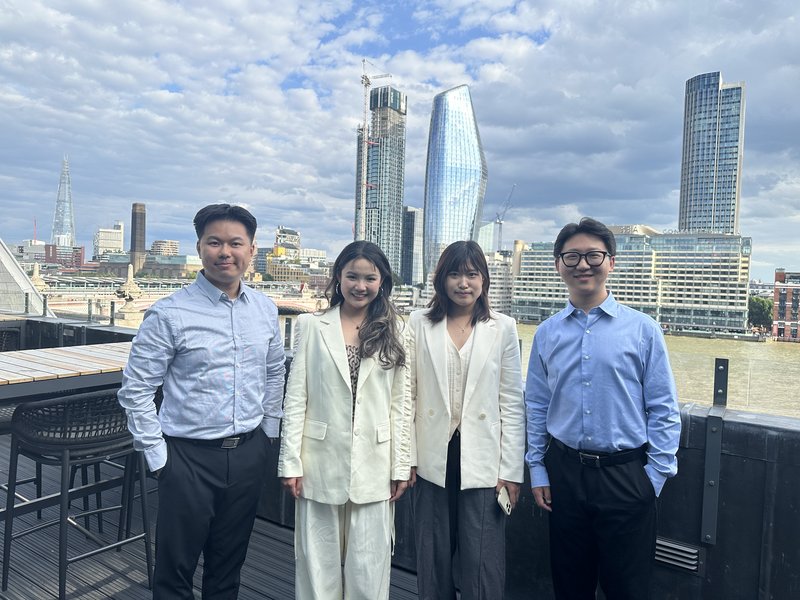
Their proposal focused on IEdu: a child-centred, ethical ‘AI ecosystem’ for early childhood education. The heart of the idea is not a single product, but a design approach: AI that supports children’s agency, learning, and wellbeing while staying developmentally appropriate and safe.
AI-co-created storybooks were a one specific feature of their ecosystem approach. These would be practical tools that translate children’s questions, emotions, and interests into playful learning experiences, rather than prescribing content or replacing adult interaction.
The wider proposal also explored how AI could support educators in early years settings, engage parents and caregivers in meaningful ways, and meet the ethical, privacy, safeguarding, and policy needs that are vital to responsible early years innovation.
The team’s approach was ambitious, but clear about what was achievable and incorporating considered and embedded approaches to all the influencing factors, such as the adults, transparency, preventing harm and avoiding unintended consequences.
We held an in-person development workshop for the winning team, working together to strengthen the proposal and explore how to translatie their academic work into real-world thinking, and what it could lead to in terms of future potential careers. The session gave them the chance to test their assumptions with independent experts, further develop their thinking and consider all elements of ensuring early years AI concepts are safe, useful, and equitable.
Author info
